
Puyallup Previous-Resident Sources
A sound search for previous residents begins with the current parcel and moves back through records created in different eras. No single Puyallup index covers every owner, occupant, address spelling, and year. Deeds document recorded interests. Directories and census schedules add household clues. Maps establish the building and lot, while permits can date physical work. The source date and what the source was designed to record matter as much as the name found in it.
| Source | Years It Covers | Where Held | What It Shows |
|---|---|---|---|
| Pierce recorder index and images | Online from 1984; older holdings vary | Auditor, Aumentum, counter, Archives | Parties, dates, instruments, legal descriptions |
| Puyallup city directories | Scattered years from 1882 through 1990 | State Library and History Room | Name, address, occupation, household clues |
| Federal census | Released schedules under the 72-year rule | NARA and library Ancestry access | Enumerated household, age, relation, occupation |
| Sanborn maps | February 1900 | Library of Congress | Building footprint, use, street layout |
| Kroll atlas | 1915 | WSU digital collection | Lots, additions, roads, some landowners |
| Puyallup permits | Current portal; start year not confirmed | City Development and Permitting | Project and application date clues |
For a modern address, start with ATIP and the Auditor. For an early twentieth-century house, the map and directory layers may establish continuity before the deed trail reaches searchable images. A directory absence is weak evidence because Puyallup's run is not continuous. The Puyallup city directory page covers those collections in depth.
Start Puyallup Previous-Resident History
Enter the current address in Pierce County ATIP and save the parcel or account number, situs address, current owner, mailing address, legal description, plat or addition, and lot and block. Situs means the physical location. A tax mailing address may belong to an owner, estate, agent, or other recipient elsewhere, so it is not proof of where anyone now lives.
The legal description is the durable bridge. Street labels can shift after annexation, renumbering, or a road-name change, but a plat, addition, lot, and block can connect two deeds that describe the same land. ATIP's linked recorded-document list is a starting point only. Pierce County warns that parcel-linked records may be incomplete.
Note: Keep the parcel number and legal description beside every name; they prevent a same-name deed from entering the wrong address chain.
Trace Puyallup Previous Owners
The Aumentum Recorder public search works by party name, date, and recording or document number, not by a complete address or parcel search. Its captured entry screen shows the official starting point for Pierce County recording research.
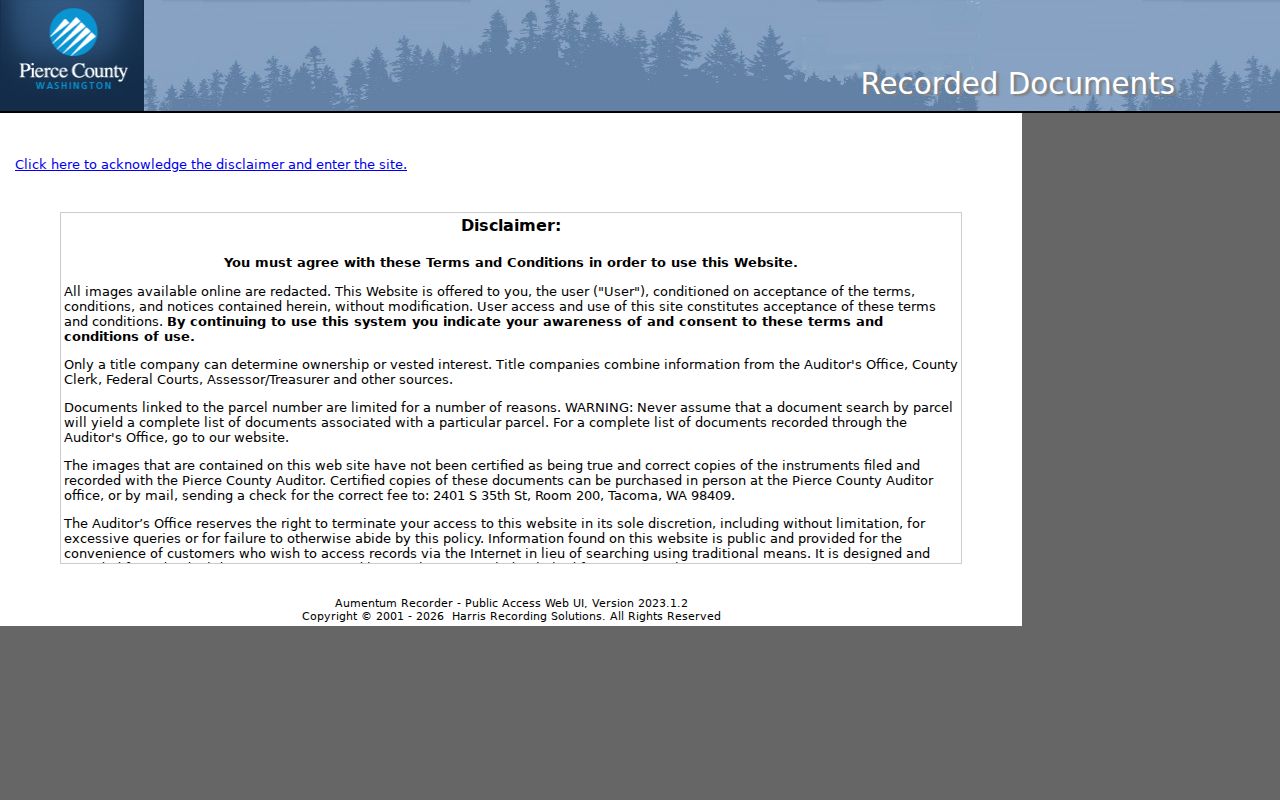
The screen is only a doorway. Start with the current owner's purchase. On that deed, the current owner is usually the grantee and the seller is the grantor. Record every identifier before moving to the prior seller.
- Copy the current owner and legal description from ATIP.
- Search the current owner as grantee across a reasonable date range. Try initials, former surnames, co-owners, trusts, and business names shown by the record.
- Open the index or redacted image. Save the recording number, date, grantor, grantee, legal description, and prior reference.
- Search that grantor as an earlier grantee, then confirm the same plat and lot before accepting the match.
- Repeat to 1984, then use the historical index, recorder counter, deed books, microfilm, or Puget Sound Regional Archives.
- Grantor
- The party giving or transferring an interest.
- Grantee
- The party receiving that interest.
- Chain of title
- The linked sequence of recorded transfers for the same land.
- Legal description
- The lot, block, plat, or survey wording that identifies land more steadily than a street address.
A mortgage, deed of trust, reconveyance, easement, covenant, or foreclosure can mark a date without transferring ownership. Online images are redacted and not certified. When proof is needed, order the proper copy from the Pierce County Recording Division.
Puyallup Previous Records Since 1984
Pierce County states that recorded documents are available online from 1984. A backfile imaging project helps explain the modern reach, but it does not mean every earlier deed image appears online. Previous residents before that line require a historical index, office-counter request, deed book, microfilm, Archives inquiry, or a professional title search when complete legal assurance matters.
The first page of a deed can supply a return address, document title, grantor and grantee, abbreviated legal description, prior recording references, and assessor parcel number. Index-only categories should not be mistaken for absent records. The researcher should also keep separate labels for not inspected, not indexed, and restricted.
Map Puyallup Previous Residences
The 1900 Puyallup Sanborn set contains nine sheets showing street layout, building footprints, uses, materials, and fire-protection details. It can show that a structure existed and how the site was arranged. It cannot name the previous residents unless another record connects a person to that place.
The 1915 Kroll atlas sheet adds roads, town limits, additions, lots, schools, churches, cemeteries, and some landowner names. Compare its addition and lot with the deed's legal description. A landowner label is a search lead, not proof that the owner occupied the building. Together, the maps can bridge an old address to a modern parcel when street wording has changed.
Annexation Shifts Puyallup Resident Labels
Puyallup and Pierce County use different address authorities. The West Hills annexation completed in 2009 and added roughly 770 acres and 1,620 residents. Another annexation followed along 39th Avenue SW in 2016. An earlier rural or urban-growth-area address may later appear in city permit and code systems without representing a move.
Use the city's annexation map, then carry the legal description across the date when the government label changes. Historic census records may use precinct, township, county, Puyallup Valley, or an older spelling rather than today's incorporated city. A gap between sources can mean a changed custodian or an unscanned book, not that the household left.
Puyallup Previous-Resident Library Help
The Puyallup History Room is the local counter for directories, yearbooks, images, maps, newspapers, and early-city material. Its official page shows the collection and current access note.
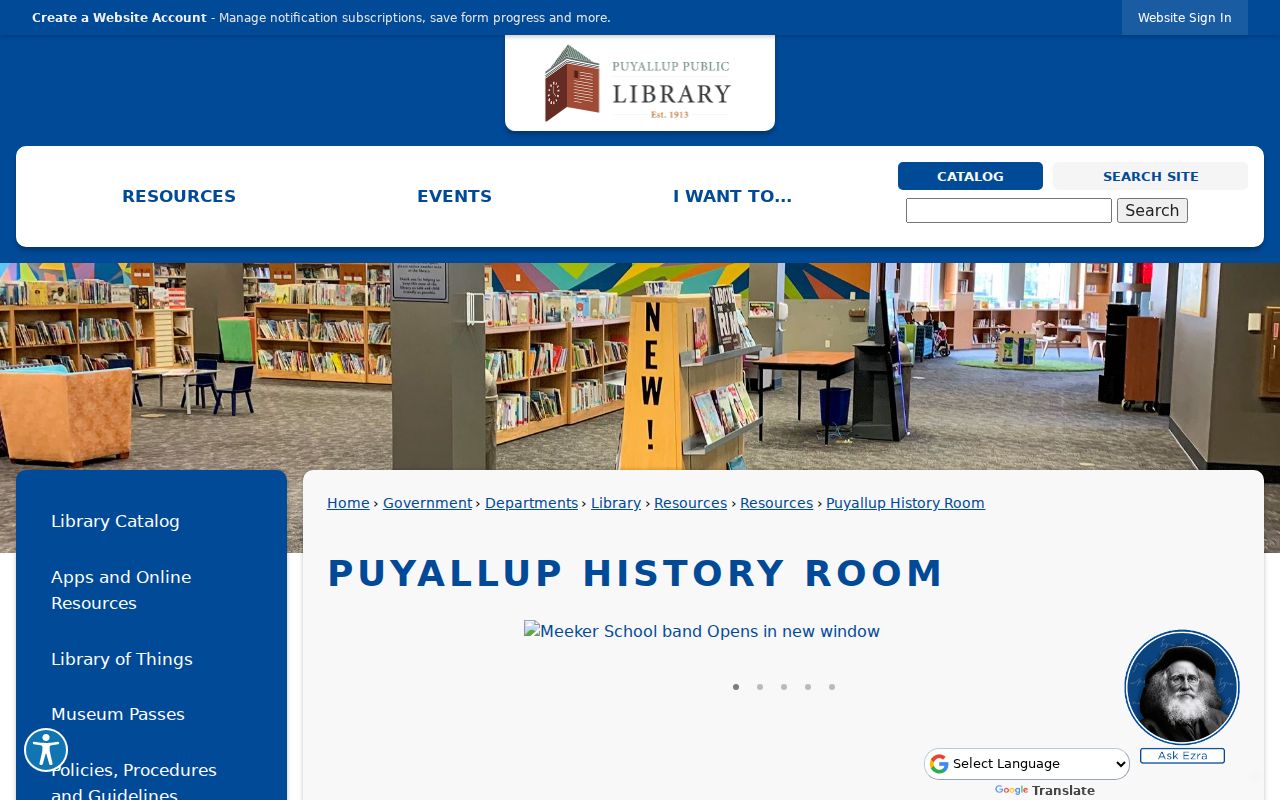
No separate official house-history guide was found, but library staff can retrieve material while the room itself is unavailable. Ancestry Library Edition is available at the library, and local news databases can supply obituaries and civic notices.
Eliza Jane Meeker's 1860s reading room is part of the local library story. That human history also points toward Meeker family and valley records, including deeds and plats tied to Maplewood Addition in the state archival inventory. Ask with a street, surname, date range, and legal description rather than a broad request for everything about a house.
Connect Puyallup Previous Households
Ownership and occupancy are different. Puyallup city directories can associate names, occupations, spouses, and addresses in scattered years from 1882 through 1990. A reverse or criss-cross directory begins with an address, but a verified Puyallup-specific run was not located. Do not describe a regional volume as complete local coverage.
- Find the address or surname in the nearest available directory year.
- Search adjacent years because the Puyallup shelf has substantial gaps.
- Pair the directory with the nearest released federal census, allowing for the census 72-year release rule.
- Compare household names, ages, relations, occupation, street, and enumeration district.
- Use newspapers, cemetery records, and Digital Archives indexes when a household disappears.
An obituary may name relatives and a personal representative. Pierce Superior Court probate records or LINX may explain a later estate deed. Marriage or death evidence can connect surnames, but those records are not proof that each named person lived at the property.
Lawful use. Research previous residents for Puyallup house history, genealogy, or estate work. Never use an address trail to watch, threaten, or harass a living person.